Vision 2030's Open Door: How American Companies Are Finding Profitable Ground in Saudi Arabia's Diversification Drive
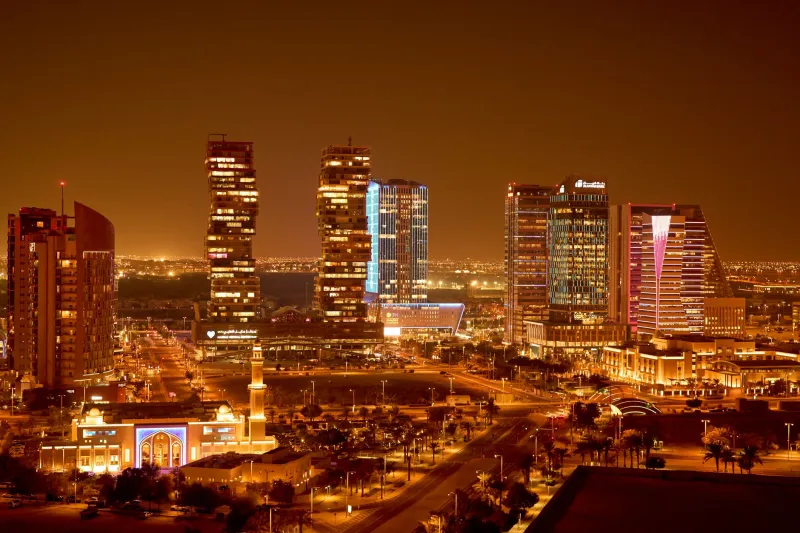
A Kingdom Reinventing Itself—and Opening Its Markets
For decades, the global business community viewed Saudi Arabia through a single lens: oil. The Kingdom's vast hydrocarbon reserves made it one of the world's most important energy exporters, but they also obscured a more nuanced commercial reality. Today, that reality is changing with remarkable speed.
Vision 2030, the sweeping economic reform agenda introduced by Crown Prince Mohammed bin Salman in 2016, has set an ambitious target: reduce Saudi Arabia's reliance on oil revenues and build a diversified economy capable of sustaining long-term prosperity. Eight years into that journey, the transformation is no longer theoretical. It is generating tangible, measurable demand for foreign expertise, technology, and capital—much of it from American companies.
At AltaMayuz KSA, we work at the intersection of Saudi commercial ambition and global business capability. What we observe on the ground is a market in active transition, with procurement cycles, licensing frameworks, and partnership structures all evolving to welcome qualified international partners. For US businesses that move early, the advantages are significant.
Renewable Energy: The Sector Drawing the Most American Interest
Perhaps no sector better illustrates Vision 2030's transformative scope than renewable energy. The Kingdom has committed to generating 50 percent of its electricity from renewable sources by 2030, a target that requires an extraordinary volume of solar panels, wind turbines, grid infrastructure, smart metering systems, and engineering expertise.
American companies have already begun staking claims. First Solar, the Arizona-based photovoltaic manufacturer, has engaged in project-level discussions tied to NEOM and the broader Saudi National Renewable Energy Program. Similarly, engineering and procurement contractors from Texas and California have found their way onto shortlists for utility-scale solar installations in the Empty Quarter region.
The entry point for many of these companies has been the Saudi Power Procurement Company (SPPC), which runs competitive tender processes that are increasingly structured to accommodate international bidders. For US firms unfamiliar with Gulf procurement norms, engaging a local commercial intermediary—or a platform like AltaMayuz KSA—to navigate pre-qualification requirements can materially improve bid outcomes.
Logistics and Supply Chain: Infrastructure Spending Creates a Multiplier Effect
Saudi Arabia's geographic position between Europe, Asia, and Africa has long been underutilized as a logistics hub. Vision 2030 aims to correct that. The Saudi Logistics Hub initiative, anchored by the King Salman International Airport development and expanded port capacity at Jeddah Islamic Port and King Abdullah Port, is generating multi-billion dollar contracts across warehousing, cold chain logistics, air freight technology, and last-mile delivery systems.
American supply chain technology companies are finding particular traction here. Firms offering warehouse management software, autonomous sorting systems, and freight visibility platforms have discovered that Saudi logistics operators are willing to pay premium prices for proven technology—provided the vendor can demonstrate regional implementation experience or a credible local partnership.
One instructive example involves a mid-sized US logistics software firm from the Chicago area that entered the Saudi market in 2022 through a joint venture with a Riyadh-based distribution company. By localizing its platform to support Arabic-language interfaces and integrating with the Zakat, Tax and Customs Authority's (ZATCA) e-invoicing requirements, the company secured contracts with three of the Kingdom's top ten retail distributors within eighteen months. The lesson is clear: technical capability alone is insufficient. Cultural and regulatory adaptation is what closes deals.
Fintech: A Regulatory Sandbox That Actually Works
Saudi Arabia's financial technology sector is among the fastest-growing in the Middle East, supported by a central bank—the Saudi Arabian Monetary Authority (SAMA)—that has built one of the region's most functional regulatory sandbox frameworks. More than 70 fintech firms have received sandbox licenses since 2018, and the Saudi Fintech hub in Riyadh now hosts companies from over 30 countries.
For US fintech companies, particularly those operating in payments infrastructure, digital lending, and wealth management technology, the Saudi market offers a compelling combination: a young, digitally fluent population, high smartphone penetration, and government-level commitment to reducing cash transactions. The Saudi Payments Network (mada) processed over 4.5 billion transactions in 2023, a figure that continues to grow as contactless and app-based payments become the default.
American companies entering this space should be aware that SAMA licensing requires a physical presence in the Kingdom, a requirement that has led several US fintech firms to establish Riyadh offices before their Saudi revenue base could justify the overhead. Those that absorbed this upfront cost have generally found the investment worthwhile. The market rewards early movers with disproportionate brand recognition in a landscape where consumer trust in financial platforms is still being established.
Tourism Infrastructure: The Sleeper Opportunity
Vision 2030 targets 150 million annual tourist visits by 2030—a number that requires essentially building a modern hospitality industry from scratch. NEOM, Diriyah, AlUla, and the Red Sea Project collectively represent over $500 billion in planned tourism infrastructure investment. American architecture firms, hotel management companies, experience design consultancies, and food and beverage operators are all finding active solicitation from Saudi project developers.
What makes tourism infrastructure particularly accessible to American companies is the nature of the procurement: it is project-based, time-limited, and heavily reliant on international creative and technical expertise that simply does not yet exist in sufficient depth within the Kingdom. This creates a window of opportunity that will narrow as Saudi educational and training institutions produce more domestic talent.
Navigating the Regulatory Landscape
For all the opportunity, American companies must approach the Saudi market with clear-eyed awareness of its regulatory requirements. The Kingdom's foreign investment framework, administered by the Ministry of Investment (MISA), has been substantially liberalized since 2020, with 100 percent foreign ownership now permitted across most commercial sectors. However, certain industries—including defense, media, and some financial services—retain local ownership requirements.
Company registration through MISA's online portal has become more streamlined, but the process still benefits from experienced local guidance. Additionally, the recent requirement for multinational companies bidding on government contracts to establish their regional headquarters in Riyadh—rather than Dubai—has reshaped entry strategies for many American firms that previously operated Gulf activities from the UAE.
Tax considerations are also evolving. Saudi Arabia introduced VAT at 5 percent in 2018, increased it to 15 percent in 2020, and continues to refine its corporate income tax framework. US companies structured as C-corporations should consult tax counsel familiar with both IRS rules and Saudi ZATCA requirements before committing to a market entry structure.
The Strategic Calculus for US Businesses
Vision 2030 is not a marketing slogan. It is a funded, institutionally supported economic program with government ministries, sovereign wealth vehicles, and private sector champions all aligned behind its objectives. For American companies in renewable energy, logistics technology, fintech, and tourism services, the question is not whether opportunity exists—it is whether they move early enough to shape the market rather than simply react to it.
AltaMayuz KSA exists precisely to help US businesses bridge that gap: connecting American commercial capability with Saudi market access, regulatory knowledge, and the kind of relationship-based business culture that still defines how significant deals get done in the Kingdom. The door is open. The question is who walks through it first.